
A Demat account has made investing in the stock market faster, safer, and more convenient by allowing investors to hold securities electronically. While most transactions are now completed online, certain situations still require a Delivery Instruction Slip (DIS). Whether you’re transferring shares to another Demat account, gifting securities, or moving investments to a different broker, understanding how a DIS works is essential.
Although many brokers now offer online transfer facilities through platforms such as CDSL Easiest and NSDL Speed-e, the Delivery Instruction Slip continues to play an important role in off-market transfers and specific account-related requests.
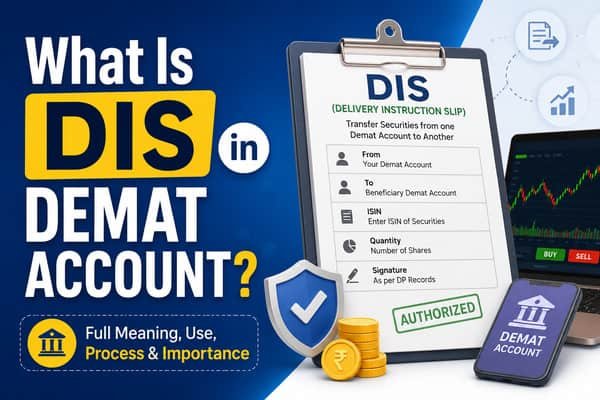
In this article, we’ll explain what a Delivery Instruction Slip (DIS) is, when it is used, how to fill it correctly, and the precautions you should take while using it.
What Is a Delivery Instruction Slip (DIS)?
A Delivery Instruction Slip (DIS) is a written instruction provided by a Demat account holder to their Depository Participant (DP), authorizing the transfer of securities from one Demat account to another.
It functions much like a cheque issued from a bank account. Just as a cheque instructs the bank to transfer money, a DIS instructs the Depository Participant to transfer shares or other securities from your Demat account.
The slip is generally issued as part of a DIS booklet provided by your Depository Participant when you open a Demat account.
Why Is a DIS Important?
A Delivery Instruction Slip ensures that securities are transferred only after receiving proper authorization from the account holder.
It is commonly used for:
- Off-market share transfers.
- Transfer of shares to another Demat account.
- Gifting securities.
- Transfer between family members.
- Broker migration.
- Certain transmission-related requests.
Although many transfers can now be completed digitally, the DIS remains relevant in situations where physical authorization is required.
When Is a Delivery Instruction Slip Required?
You may need to submit a DIS in the following situations.
Off-Market Share Transfers
If you’re transferring shares directly to another Demat account without using a stock exchange, a DIS is generally required.
Examples include:
- Family transfers.
- Internal portfolio restructuring.
Changing Brokers
When moving your securities from one broker’s Demat account to another, your Depository Participant may require a completed Delivery Instruction Slip if the transfer isn’t carried out through an online facility.
Gifting Shares
Investors wishing to gift securities to another individual may need to submit a DIS for the transfer.
Transfer Between Your Own Accounts
If you maintain multiple Demat accounts, a DIS can be used to transfer holdings from one account to another where applicable.
Information Included in a Delivery Instruction Slip
A DIS generally contains the following information:
- DP ID
- Client ID
- ISIN (International Securities Identification Number)
- Security name
- Quantity of securities
- Target Demat account details
- Execution date
- Account holder’s signature
All information must be filled accurately to avoid delays or rejection.
How to Fill a Delivery Instruction Slip
Filling out a DIS correctly is important because errors can delay or prevent the transfer.
Step 1: Enter DP and Client Details
Provide your:
- DP ID
- Client ID
- Demat account number
These identify the source account from which securities will be transferred.
Step 2: Enter Recipient Details
Fill in the destination account information, including:
- DP ID
- Client ID
- Beneficiary name
Ensure these details exactly match the receiving Demat account.
Step 3: Mention Security Details
Provide information such as:
- ISIN
- Security name
- Number of shares or units to be transferred
Always verify the ISIN carefully before submission.
Step 4: Select the Transfer Type
Specify whether the transfer is:
- Off-market
- Inter-depository transfer
- Market transfer (where applicable)
Your Depository Participant can guide you if you’re unsure.
Step 5: Sign the DIS
The signature should match the one registered with your Demat account.
A signature mismatch may result in rejection.
Step 6: Submit the DIS
Submit the completed Delivery Instruction Slip to your Depository Participant before the applicable cut-off time.
The DP will verify the request before processing the transfer.
Online Alternatives to Physical DIS
Today, many brokers provide digital alternatives for transferring securities.
Some commonly used online facilities include:
- CDSL Easiest
- NSDL Speed-e
- Broker-specific online transfer services
These platforms allow eligible investors to transfer securities electronically without submitting a physical Delivery Instruction Slip.
However, physical DIS forms may still be required in certain situations depending on your broker and the type of transaction.
Common Reasons for DIS Rejection
A Delivery Instruction Slip may be rejected for several reasons, including:
- Incorrect DP ID or Client ID.
- Wrong ISIN.
- Signature mismatch.
- Insufficient securities.
- Overwriting on the form.
- Missing mandatory fields.
- Submission after the prescribed deadline.
Reviewing the form carefully before submission helps avoid these issues.
Safety Tips While Using a DIS
Because a Delivery Instruction Slip authorizes the movement of valuable securities, it should be handled carefully.
Follow these best practices:
- Never sign a blank DIS.
- Store unused DIS booklets securely.
- Fill all unused spaces to prevent misuse.
- Use clear handwriting.
- Keep a photocopy or scanned copy for your records.
- Obtain an acknowledgment after submission.
Taking these precautions helps reduce the risk of unauthorized transactions.
Advantages of Using a Delivery Instruction Slip
Despite the availability of digital transfer options, the DIS remains useful because it:
- Provides written authorization for transfers.
- Supports off-market transactions.
- Enables gifting of securities.
- Facilitates transfers between Demat accounts.
- Offers an additional layer of verification in certain situations.
For investors who frequently transfer securities, understanding the DIS process is beneficial.
Common Mistakes to Avoid
Many investors unintentionally delay transfers by making simple mistakes, such as:
- Entering an incorrect ISIN.
- Mentioning the wrong Client ID.
- Forgetting to sign the slip.
- Leaving blank spaces.
- Using outdated DIS booklets.
- Waiting until the last minute to submit the request.
Double-checking all details before submission can help ensure a smooth transfer process.
Conclusion
A Delivery Instruction Slip (DIS) is an important document used to authorize the transfer of securities from one Demat account to another. While online transfer facilities have made the process more convenient, the DIS continues to play a vital role in off-market transfers, gifting shares, and certain account-related transactions.
By understanding how to fill out a DIS correctly, verifying all account details, and following proper security practices, investors can transfer their securities safely and efficiently. Whether you’re changing brokers, transferring shares to a family member, or managing multiple Demat accounts, knowing how a Delivery Instruction Slip works is an essential part of successful investing.
FAQs
1. What is a Delivery Instruction Slip (DIS)?
A Delivery Instruction Slip (DIS) is a written instruction submitted by a Demat account holder to their Depository Participant, authorizing the transfer of securities from one Demat account to another.
2. When is a DIS required?
A DIS is commonly used for off-market share transfers, gifting securities, transferring investments between Demat accounts, changing brokers, and certain other transactions where written authorization is required.
3. Can I transfer shares without a physical DIS?
Yes. Many Depository Participants and brokers offer online transfer facilities such as CDSL Easiest, NSDL Speed-e, or their own digital transfer platforms. However, a physical DIS may still be required for specific transactions or if online services are not available.
4. What happens if I make a mistake while filling out a DIS?
Incorrect information—such as an invalid ISIN, incorrect Client ID, signature mismatch, or incomplete details—may lead to rejection or delays in processing the transfer request.
5. Is a Delivery Instruction Slip similar to a cheque?
Yes. A DIS is often compared to a cheque because it authorizes the transfer of securities from your Demat account, just as a cheque authorizes the transfer of money from your bank account.