
When buying furniture, kitchen cabinets, wardrobes, or beds, most Indian families face a common dilemma — Engineered Wood or Plywood? Both are widely used and look similar after finishing, but they differ greatly in strength, cost, durability, and performance in Indian conditions. This easy guide will help you choose wisely for your home in Delhi, Mumbai, Bangalore, or anywhere in India.
What is Plywood?
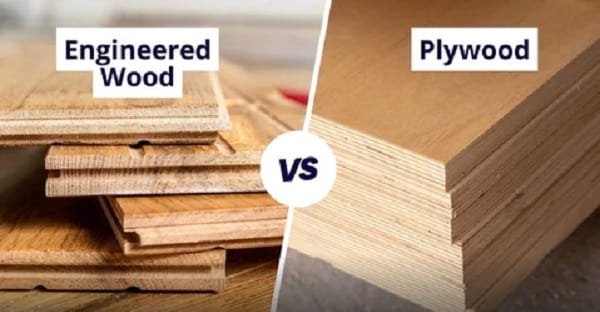
Plywood is made by gluing multiple thin layers (plies) of real wood veneers together. Each layer is placed at a 90-degree angle to the next, making it strong and stable. Popular grades in India are MR (Moisture Resistant) and BWR (Boiling Water Resistant). Top brands: Greenply, Century Ply, Kitply, and Merino.
What is Engineered Wood?
Engineered Wood is a broad term for man-made wood panels like MDF (Medium Density Fiberboard), Particle Board, HDF, and Block Board. These are created by breaking wood into fibers or particles, mixing them with resin, and pressing under heat. They are then covered with veneer, laminate, or acrylic. Brands like Action Tesa, Greenlam, Archidply, and imported options are common.
Head-to-Head Comparison
1. Strength & Durability
- Plywood: Much stronger and more durable. It handles weight well and is less likely to sag or bend. Excellent for structural use like beds, shelves, and kitchen platforms.
- Engineered Wood (MDF/Particle Board): Weaker in load-bearing. MDF is smooth but can sag over time if used for large shelves. Particle Board is the weakest.
2. Cost
- Plywood: More expensive. Good quality plywood furniture costs ₹2,000–4,000 per sq.ft.
- Engineered Wood: Significantly cheaper (30–60% less). Ideal for budget-conscious families. A full wardrobe in engineered wood can save you ₹15,000–40,000.
3. Moisture & Indian Climate
This is very important for India.
- Plywood (especially BWR/Marine grade): Better resistance to humidity and occasional water exposure. Performs well during monsoons in Delhi or Mumbai.
- Engineered Wood: Highly sensitive to moisture. MDF and Particle Board swell and lose shape quickly if water touches them. Not ideal for kitchens or bathrooms without perfect sealing.
4. Weight
- Plywood: Heavier and sturdier.
- Engineered Wood: Much lighter, making it easier to shift furniture and good for upper floors or rented homes.
5. Termite & Borer Resistance
Both can be attacked by termites if not treated. However, many modern plywoods come with better built-in protection. Engineered wood needs good anti-termite treatment.
6. Finish & Looks
Both can look identical after applying laminate, veneer, or acrylic. Engineered wood gives a smoother surface for painting or membrane finishing.
7. Maintenance & Lifespan
- Plywood: Lasts 15–25 years easily with proper care. Easier to repair.
- Engineered Wood: Lasts 8–15 years. Difficult to repair once swollen or damaged.
8. Eco-Friendliness
Plywood uses more natural wood. Engineered wood makes better use of wood waste and is more sustainable if sourced responsibly.
Which One Should You Choose?
Choose Plywood if:
- You want strong, long-lasting furniture.
- For kitchen cabinets, beds, or heavy-use areas.
- You live in humid climates or have high moisture concerns.
- Budget allows premium quality.
Choose Engineered Wood if:
- Budget is limited.
- For wardrobes, TV units, pooja units, or light-use furniture.
- You want lighter furniture that is easy to move.
- Using in dry areas with low moisture risk.
Smart Indian Tip: Many people now use a combination — Plywood for the base and structural parts (carcass) and Engineered Wood or MDF with laminate/veneer on visible shutters for a beautiful finish at lower cost. Always choose BWR grade plywood and boiling water resistant engineered boards for Indian homes.
Environmental & Health Angle
Choose E0 or E1 grade boards (low formaldehyde) from both categories. This is especially important for families with children and elderly members. Look for FSC certified sustainable products.
Final Verdict
Plywood is the better and safer choice for most Indian homes if you want strength, durability, and peace of mind. Engineered Wood is excellent when budget is tight and the furniture is not exposed to heavy use or moisture.
The smartest way is to use a hybrid approach — Plywood for the main structure and Engineered Wood/MDF for decorative parts. Always visit showrooms in your city (Kirti Nagar in Delhi has excellent options), touch and feel the materials, and clearly tell the designer about your city’s climate and usage.
Good quality wood materials can make your furniture last for decades through Indian festivals, family gatherings, and daily life. Choose according to your needs and budget — not just the cheaper option!
Frequently Asked Questions (FAQ)
Q1. Which is better – Engineered Wood or Plywood?
A: Plywood is stronger and more durable, while Engineered Wood is cheaper and lighter. Plywood is better for long-term use.
Q2. Is Engineered Wood the same as MDF?
A: MDF is one type of Engineered Wood. Particle Board is another. Plywood is technically also engineered but made differently.
Q3. Which is better for Indian kitchen?
A: Plywood (BWR grade) is much better due to higher moisture resistance.
Q4. Does Engineered Wood swell in monsoon?
A: Yes, very easily if water touches the edges. Proper edge banding and sealing is essential.
Q5. What is the price difference?
A: Engineered Wood is 30–60% cheaper than plywood.
Q6. Which one is more termite proof?
A: Both need treatment. Good quality plywood usually performs better.
Q7. Best brands in India?
- Plywood: Greenply, Century Ply
- Engineered Wood: Action Tesa, Greenlam, Archidply
Q8. Can I use Engineered Wood for beds?
A: Yes, but use thicker boards and good support. Plywood is safer for heavy beds.